

Acrylic Paintings
There are quite a few steps to complete before and after the painting process to protect the artwork from moisture and light.
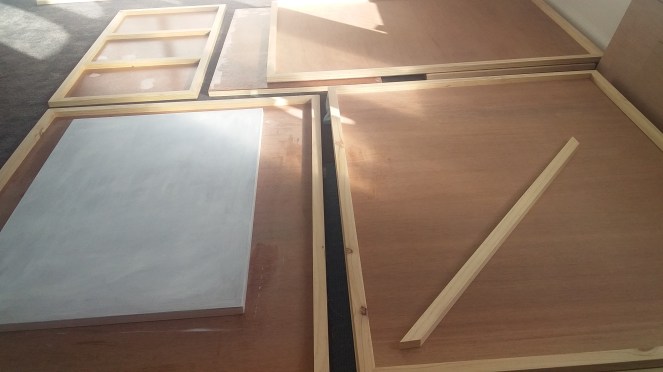
I started off painting on canvas, then I switched to MDF boards and now I paint on marine plywood with pine frames as a support structure. My lovely, supportive better half and former furniture maker – Andy, cuts the boards and frames for me. After the pine framing is glued on the board it needs planing and filling. When I am happy with how the board looks I sand it multiple times until it is nice and smooth. The whole process up to here can take a couple of days- if not longer, as we usually make a bulk of boards at once.
Before I can start painting I apply at least 2-3 coats of acrylic sealer (Golden GAC100), making sure I sand in between the layers to get rid of the brush strokes. After those initial layers I need to figure out if I want to start on a dark or light background. The primer is the next layer and can be mixed with paint to create the painting surface and already some of the background. I apply 2-3 layers onto the board, making sure I sand between new coats.
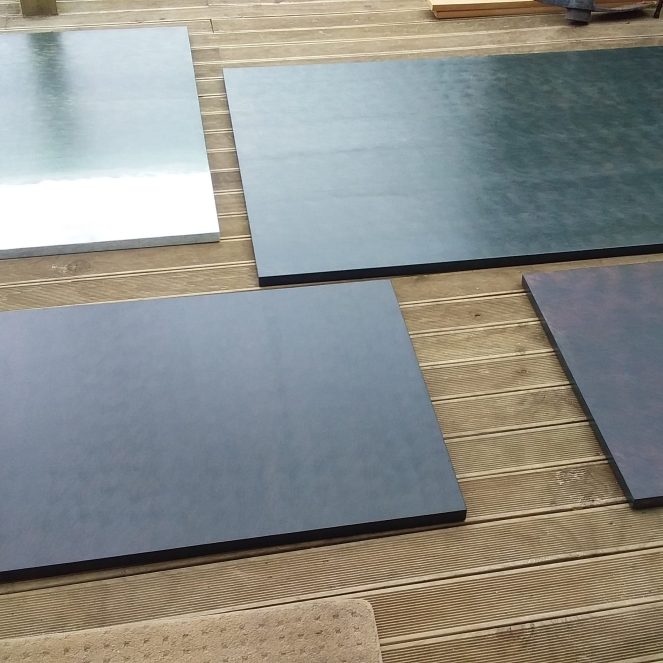
Yay! Now, the painting can finally start :-)
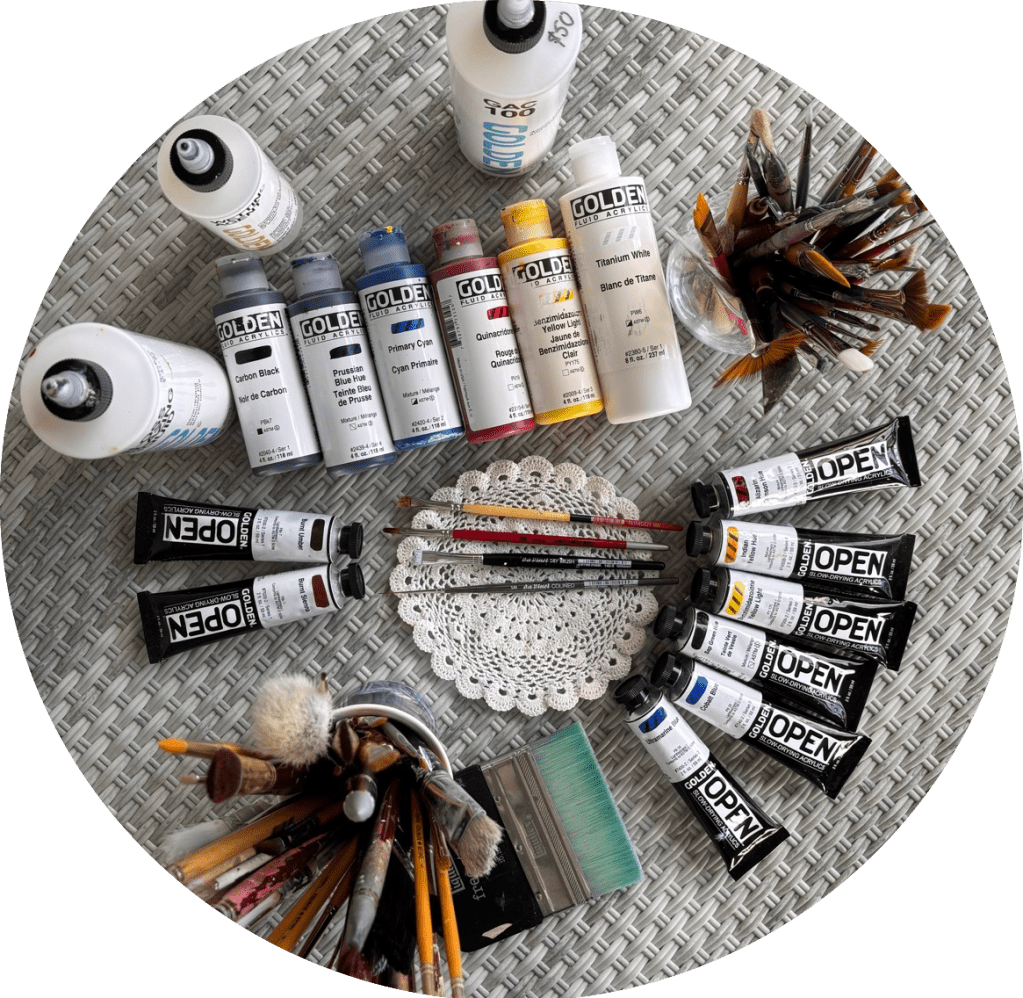
At the moment I mostly paint with Golden, especially when I do my still life tondos but I also have some Pebeo Artist Acylics Extra Fine which I really like. If I need thinning or a glaze I add glazing medium. I also use Golden Open Acrylics. They are great to create skies, especially with the combination of wetting agent since this slows down the drying time a little.
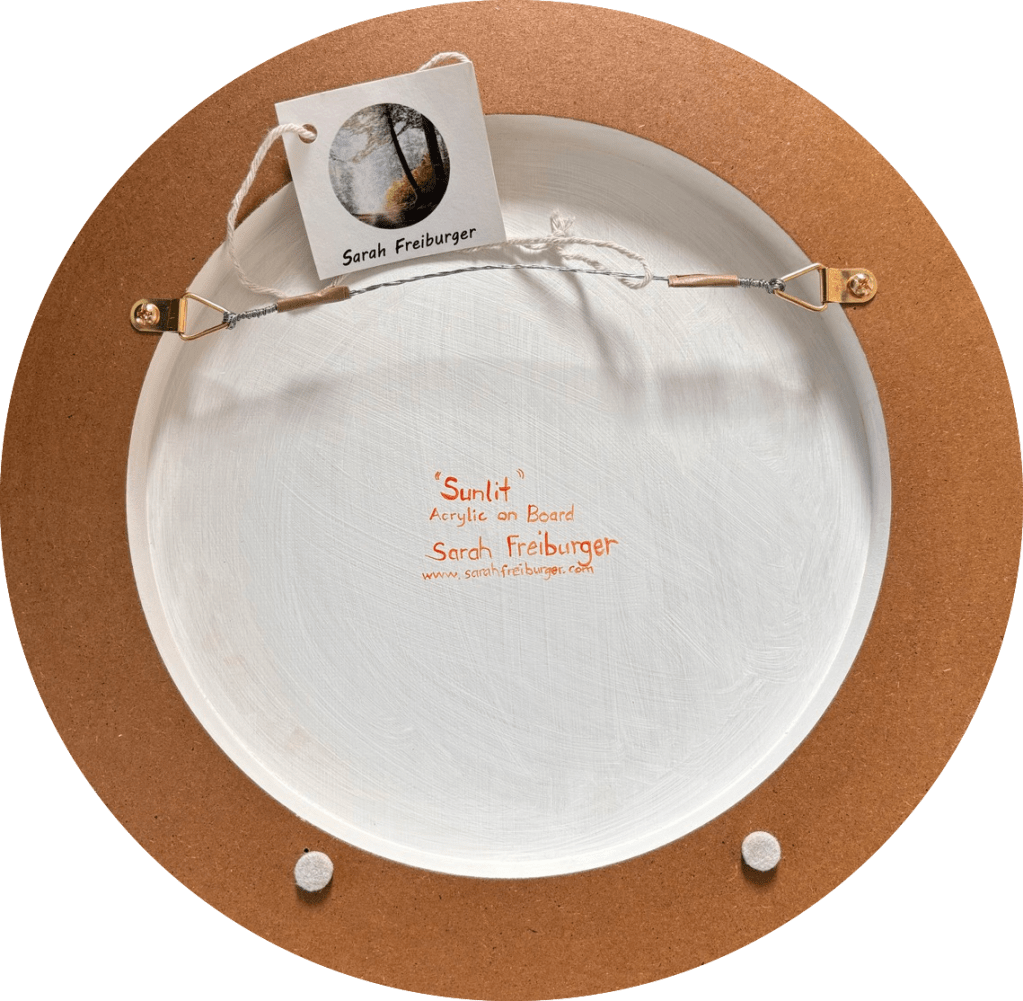
When a painting is complete I wait at least 48 hours before applying layers of isolation coat. This is strictly speaking not a necessary step and I have completed many paintings in the past without this coat but I noticed it evens out the sheen quite well. I apply this with a roller or a soft, wide brush to achieve an even, thin application. The last step is varnishing. From my experience acrylic paintings can do without a varnish, especially if they already have isolation coats, but it provides extra protection against UV-rays, dust and cleaning. I usually apply 1-2 layers of varnish after waiting around a full week from the last isolation coat to ensure the painting is fully dry. You can care for your acrylic painting by keeping it away from direct sunlight or high humidity. Every now and then a quick wipe with a damp cloth helps to keep the artwork vibrant and dust free.

Watercolour Paintings
Working in watercolours is a lot more demanding and challenging for me than doing an acrylic painting. I guess I am still automating my skills.
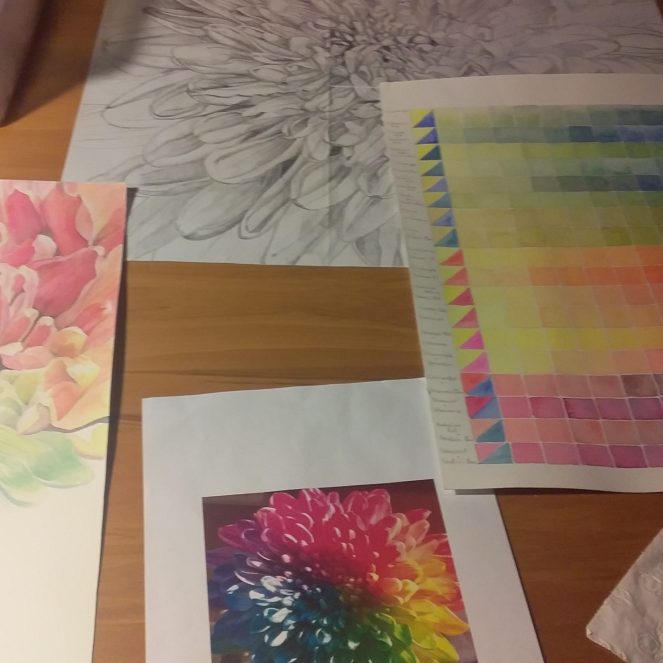
Starting a watercolour painting is a lot more straight forward than my acrylic boards preparations. However, it does take precise planning in the beginning stages, as I usually know exactly what and how I am going to paint. All the paper I work with is of highest quality. Depending on the effect I want for the finished piece I either use hot or cold press paper, both heavy (between 300-640gsm). Hot press paper is great for detailed work but does not soak up water as well as the cold press. For the way I work with my fluid works (wet in wet with multiple layers) I do need to stretch my paper on a board beforehand. Other than that it is sweet to go. When I paint my florals I only stretch the paper as a last step after the painting is complete.
Since watercolour is not as forgiving as acrylics when it comes to ‘change of plan’ decisions, I draw a very detailed sketch first that I can then transfer onto the watercolour paper. For floral art, I sometimes do swatches and a less detailed painting to figure out the layers of paint I need to apply for a certain final look. Layering provides more depth to the painting and renders great effects in different light settings. This is also really important for my more ‘fluid background’ works. They are incredibly fun to do and I can work more freely on a piece. When a watercolour piece is finished it needs framing for professional representation and protection. Frames can be easily changed depending on personal preferences. Even with a good quality frame the painting should not be exposed to prolonged, direct sunlight.

 Sarah Freiburger